
How does lighting affect sofa colours?
There’s a lot to consider when shopping for your new sofa. Size, seats, softness – and that’s before you even think about the look. But when it comes to choosing your perfect colour, did you know that your living room lightbulbs might make all the difference?
Read on to find out how your lighting might affect your sofa’s colour and what you can do to avoid any major tonal mishaps.
Lights and colours: the science
You might not think your living room lamp has much to do with the colour of your sofa – but we’re here to tell you otherwise!
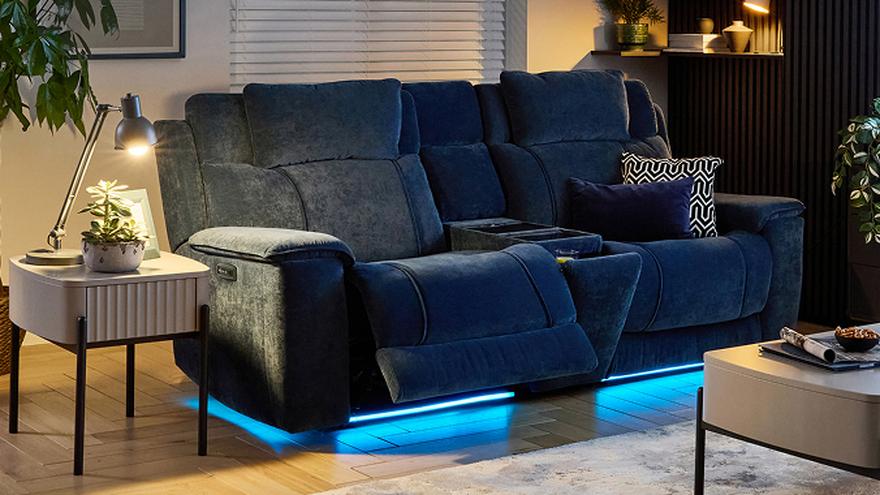
Light and colour temperature
Different lightbulbs of different strengths, measured by Kelvins (K), vary in ‘colour temperature’, which is the official term for how warm or cool your light source is. Lamps with a lower Kelvin rating are described as warm lights – the yellow-toned kind you might find in a cosy bookshop or bedroom – whereas LEDs around the 4000 to 5000K range are much cooler, like the clinical blue-ish white lighting in dentists and studios. Beyond that, you’ll find natural light, or daylight.
How does the temperature of light affect colour?
How warm or cool a light is changes how other colours appear under that light. The same cream t-shirt, for example, might look almost white under the lighting of a shop’s dressing room, but closer to beige when you try it on again in your warmer lit bedroom. That’s because cooler light brings out the blue, green, and purple undertones of colours, while warm lighting makes yellow, orange, and red undertones pop.

Does lighting affect paint colour?
Yes! Lighting affects the colour of paint on your walls just how it might affect your sofa colour. A wall paint that looks completely neutral under the cool lights of your local B&Q might appear significantly warmer in your bedroom or living room. On the other hand, brighter coloured paints might not truly shine until they’re on your kitchen wall and in the daylight!

How do other colours in your room change how your sofa looks?
Complementary colours on your walls and accents can influence the colour of your sofa in the same way as light. In a room full of bright, cool-toned furniture and paint, a sofa with subtle warm undertones will look decidedly darker than it might appear in a warmer-toned room. To avoid any major clashes and ensure your furniture looks cohesive, try to match the undertones of all your pieces.
How lighting affects your sofa’s colour
Now you know how lighting affects colour in a room – why is that important when you’re buying a sofa, or any other furniture, from DFS? We took three photos of the same sofa – in the same colour, in the same place, at the same time – to show you just how much your lighting can affect how your sofa looks.
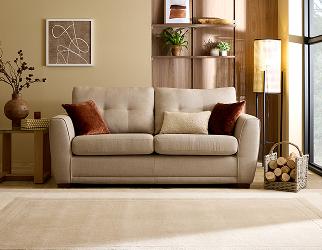
Warm light
Brings out the warmer undertones – yellow, orange, red – of the colour.
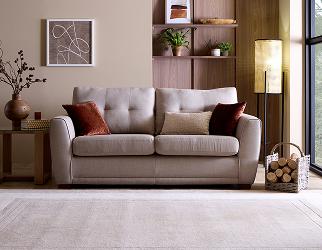
Cool light
Brings out the cooler undertones – blue, purple, green – of the colour.
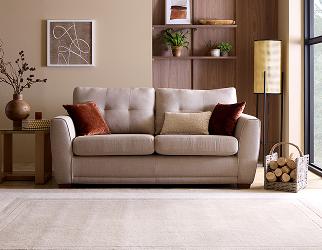
Neutral light
Presents the most balanced, ‘true’ version of the colour.
Matte vs reflective fabrics
Did you know the material of your furniture can also affect its colour? Light reacts differently to different textures, so the same shade of pink that’s perfect on your velvet scatter cushion might not look quite right as a fluffy rug. Find out more below.

Glossy and shiny material
Ever noticed that colours with a shiny finish seem more vibrant than those that are matte? That’s because shiny surfaces reflect light differently, creating a more intense colour. That means a glossy white tabletop will probably look more vibrant than a matte white tabletop under any light.
The same is true for fabrics! High lustre fabrics, like velvet and some chenilles, have a reflective sheen that makes colours pop – so if you’re after bright and bold on your sofa, choose a high sheen fabric over a matte one.

Leather
The luxury of leather is ideal for classic colour palettes. Sleek, modern leather looks particularly elegant in cool whites, greys, and blacks, while more traditional leather sofas are often found in brown and burgundy. As with all materials, leather’s finish will affect how the colour looks in your living room – glossy leathers are more vibrant than their matte alternatives.

Fabric
Fabric is a classically cosy choice for furniture – but not all fabrics are created equal. Lots of our fabrics feature a luxurious sheen, reflecting light across the form of your sofa for a multi-tonal effect that will look different under different lighting conditions. Texture, too, plays a part in how your fabric colour will look – some weaves use multiple colours of thread to achieve their effect, while other fabrics like boucle might appear as one solid colour.
How to choose a colour with confidence
With so many factors in play, you’d be forgiven for feeling a little bit nervous about choosing a colour. But don’t panic – we’ve got plenty of tips and tools to help you find your perfect pop of blue, green, cream, or whatever you fancy.

1. Assess your lighting
First things first, look at your lighting. Knowing how cool or warm your lighting is will make picking your sofa colour easier down the line. Most lightbulbs have colour temperature information on their packaging, or you can figure it out by whether your room is washed in a yellow or white glow. Remember to consider how much natural light you get in the room your furniture will live in, too!

2. Consider your existing colours
If your new furniture needs to match your existing room, don’t forget to take existing colours into account. Of course, this means ensuring there’s no major colour clashes – unless eclectic maximalism is your thing! – but you should also note the undertones of your walls and accents. Match your new furniture’s undertones to these for a cohesive look.

3. Order a swatch
There’s nothing better than the real deal. Once you’ve chosen a few colours and fabrics you like, order a swatch to see exactly how they’ll look in your space. Remember to view your swatch at different times throughout the day and from different angles to get a fuller picture of what your sofa might look like.
4. See our sofas in real homes
Still not sure how your furniture of choice will look in your living room? Let our lovely DFS customers inspire you, with pictures of our sofas styled and settled in real homes. Find the furniture you’ve got your eye on and get a peek at how it looks in different lighting and against varying wall colours before you make your choice.


What to expect from your new sofa

Sofa materials

